
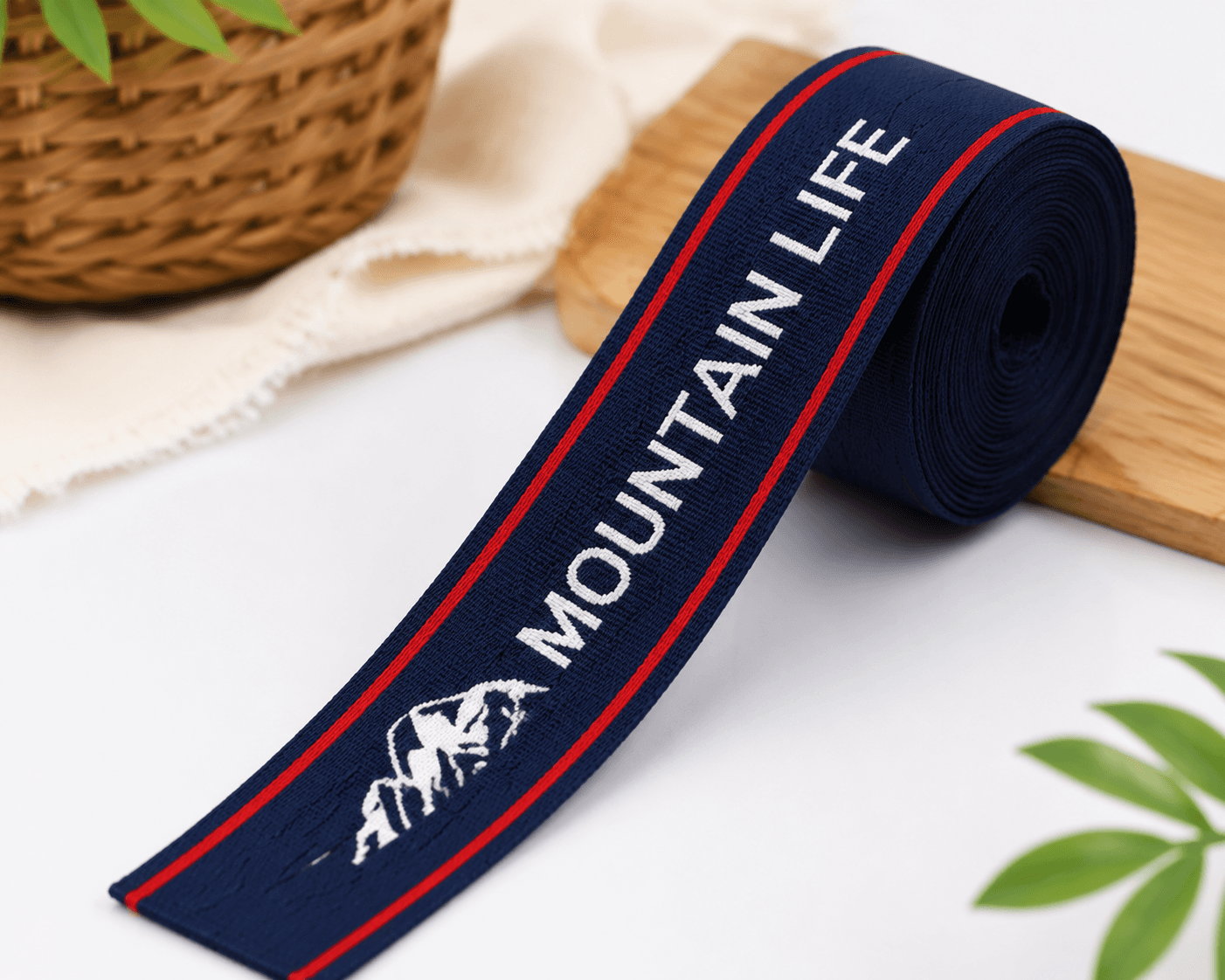
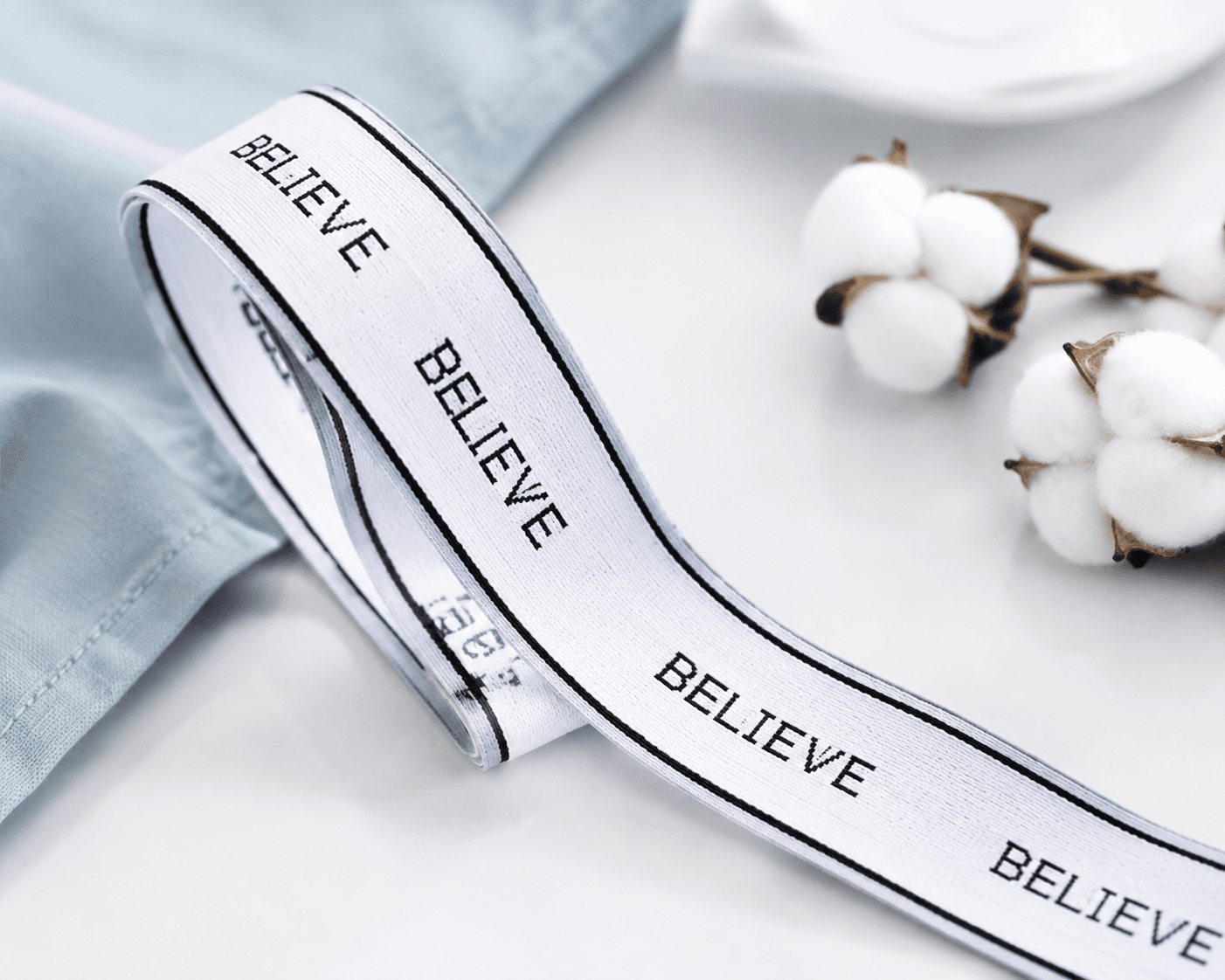
Custom elastic webbing appears in underwear, sportswear, footwear, bags, medical supports and many other products. Small differences in construction or finishing can change stretch, feel, durability and appearance.
Start with the application, not the material name
Tell the manufacturer where the elastic will be used, how it will be sewn or assembled, and what the finished product must withstand. “Polyester elastic, 40 mm” leaves important questions unanswered. A waistband worn next to skin needs a different balance of softness and recovery from a load-supporting strap.
Describe the job the webbing must do. The factory can then translate that requirement into yarn, construction and finishing options.
- Finished product and target user
- Direct skin contact or external use
- Expected load, movement and stretch
- Washing, moisture, UV or abrasion exposure
Choose a construction that supports the design
Construction affects appearance, stretch direction, thickness, edge stability and branding possibilities. A supplier should explain the trade-offs instead of simply copying a photo.
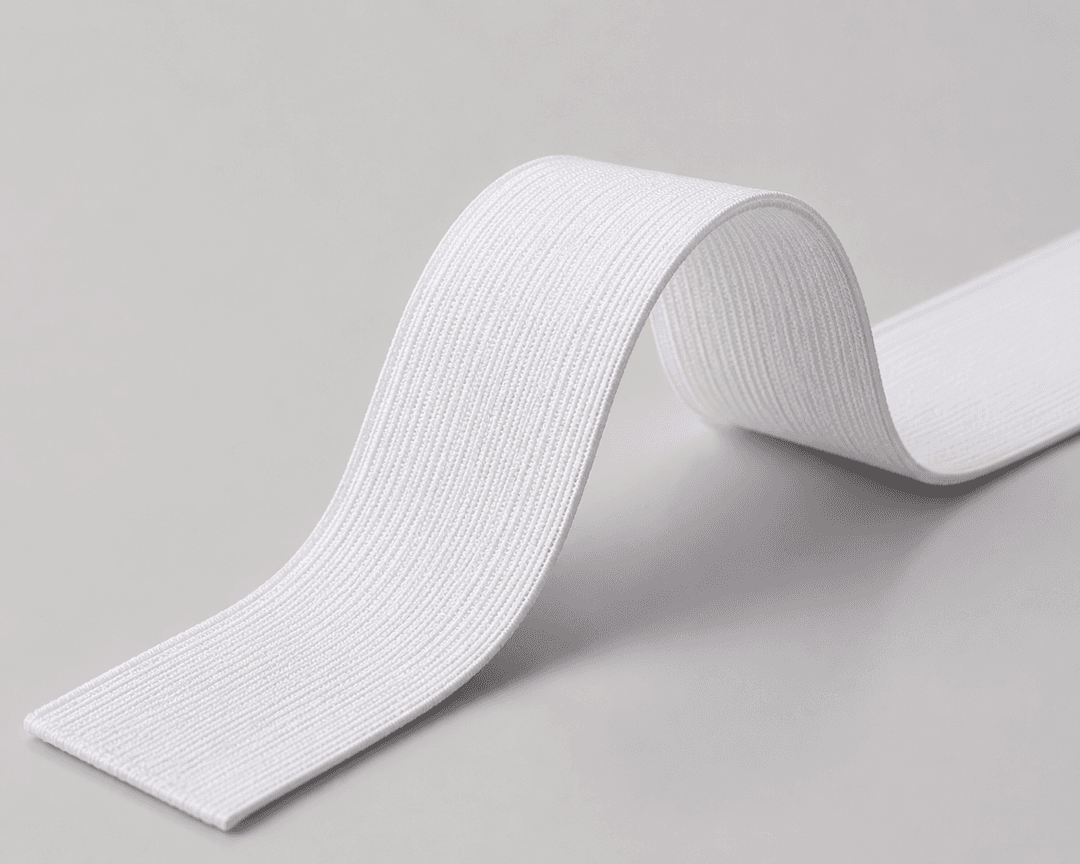
Stable and structured for controlled stretch, waistbands and support applications.
Often softer and more economical, with flexibility suited to apparel and lighter uses.
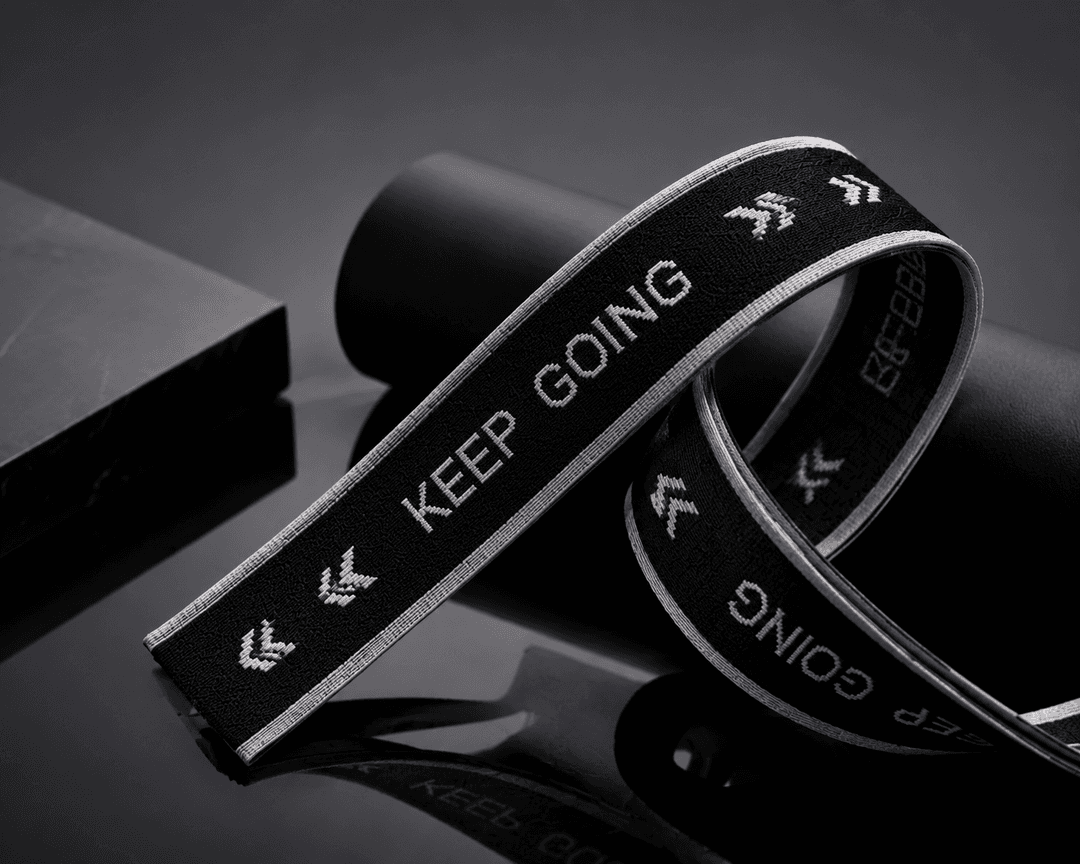
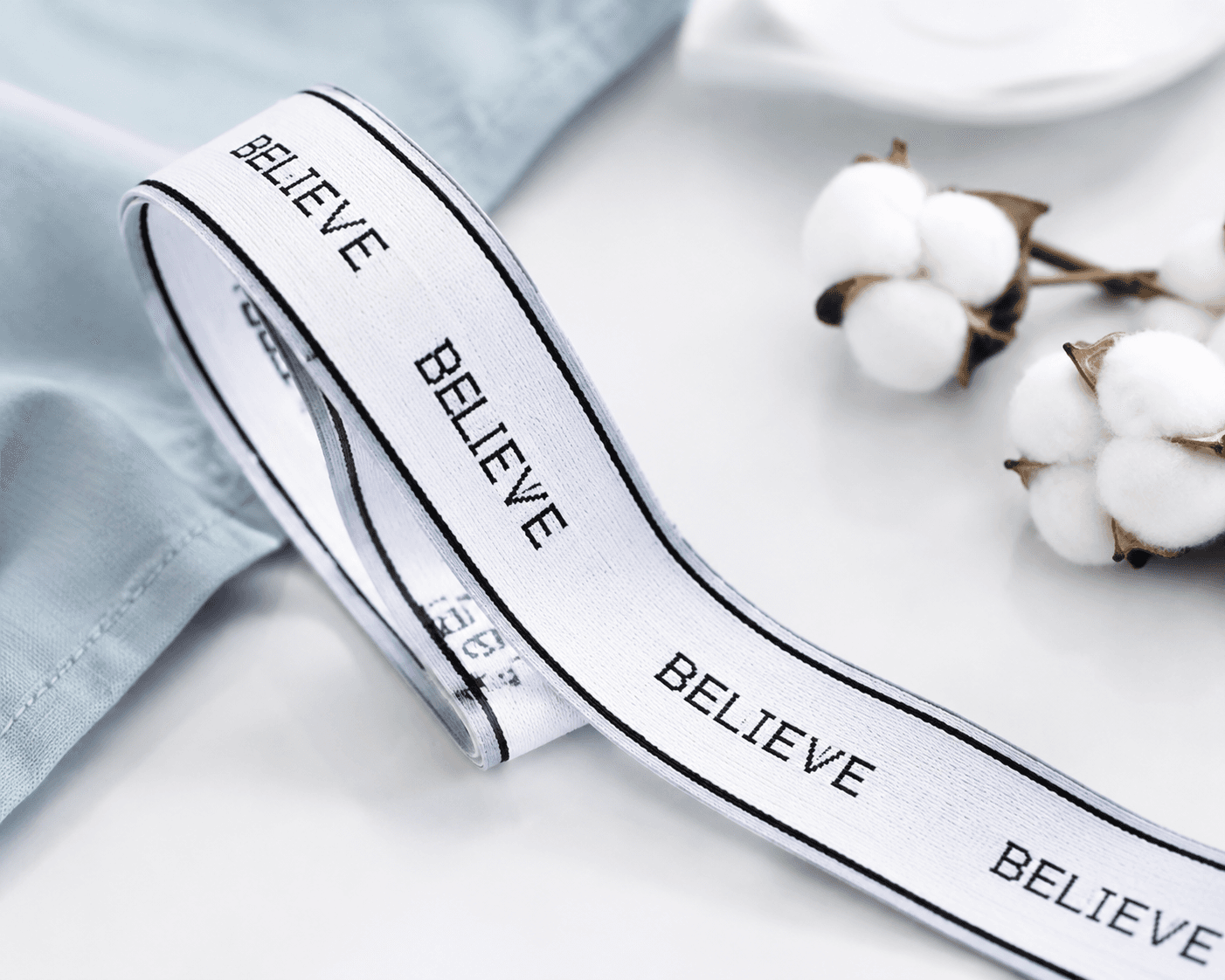
Integrates logos or patterns into the weave for durable, premium brand presentation.
Define measurable performance requirements
Words such as “strong,” “soft” or “high stretch” are subjective. Where possible, provide a reference sample and agree on a measurable approval method.
| Specification | What to define | Why it matters |
|---|---|---|
| Width | Finished width and tolerance | Fit with garments, buckles or sewing guides |
| Stretch | Extension under agreed load | Comfort and functional movement |
| Recovery | Return after repeated extension | Prevents loosening during use |
| Color | Approved swatch or color reference | Consistency with the final product |
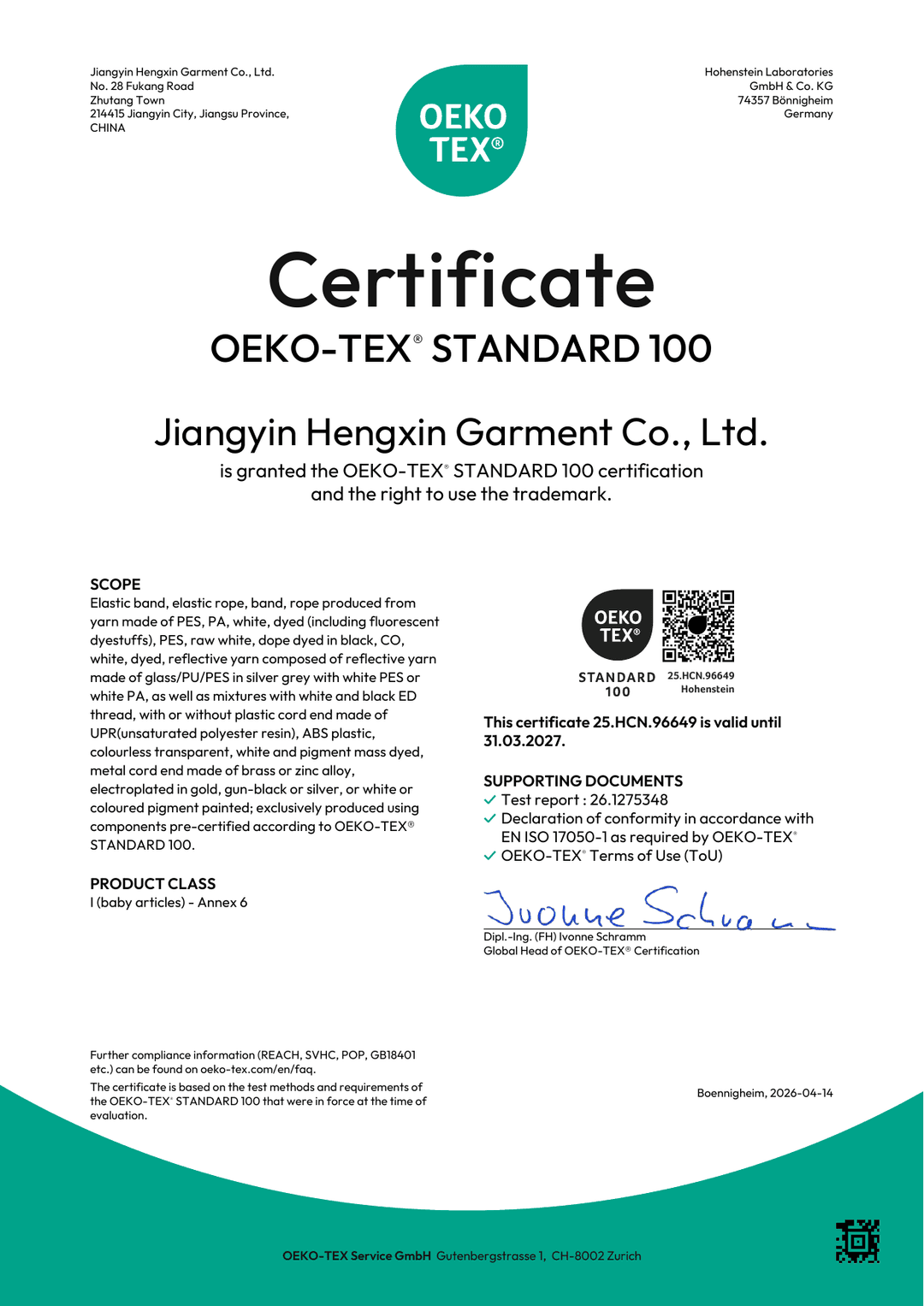
| Testing | Wash, rubbing, strength or restricted substances | Supports market and brand requirements |
Prepare artwork and branding details
Provide vector artwork whenever possible. Confirm the logo height, repeat length, orientation, ground color and whether the reverse side will be visible. Complex artwork may need to be simplified to remain clear at the chosen width.
Ask for a digital layout before physical sampling. It is faster to correct spacing, scale and repeat direction before the loom or printing setup begins.
Custom elastic webbing specification checklist
Use the following six-part brief when requesting a quotation or sample.
Where the elastic will be used and how it must perform.
Woven, knitted, braided or jacquard, based on stretch and appearance.
Finished width, thickness, roll length and permitted tolerance.
Stretch ratio, recovery, hand feel, wash resistance and strength.
Logo artwork, repeat length, colors and front/back appearance.
Sample quantity, target volume, packaging and delivery schedule.
Common buyer questions
What information is needed for a quotation?+
Share the application, construction or reference sample, width, color, stretch requirement, branding method and estimated order quantity.
Can custom elastic webbing be color matched?+
Yes. A physical color swatch or recognized color reference helps the factory prepare a more accurate lab dip or yarn match.
Is jacquard or printed branding better?+
Jacquard branding is woven into the structure and suits a premium, durable finish. Printing may suit detailed graphics, gradients or smaller initial programs.
How should buyers approve a production sample?+
Approve the sealed sample against an agreed checklist covering dimensions, color, logo repeat, stretch, recovery, hand feel and finishing.